
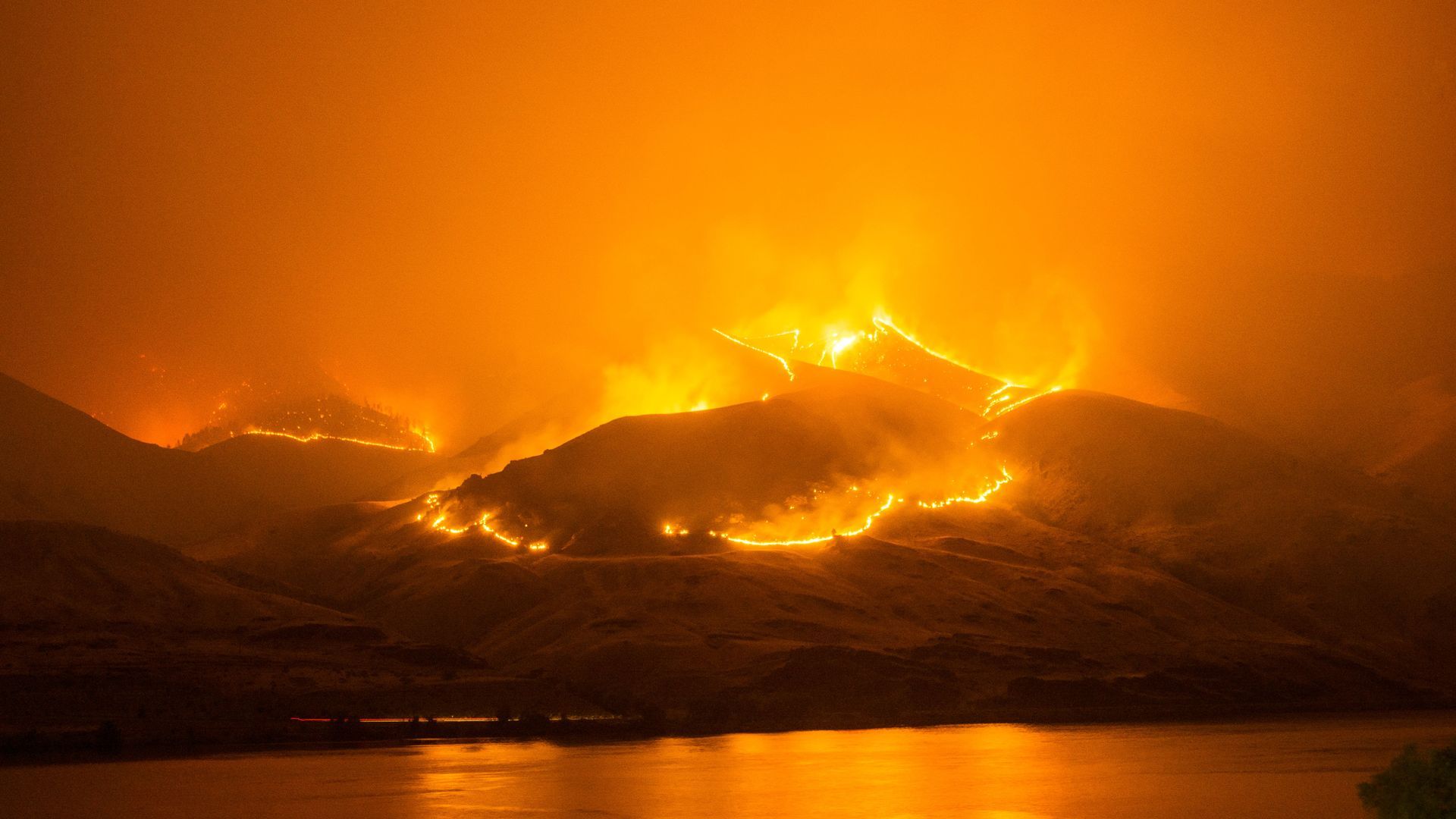
Is Your Central Washington Home and Property Ready for Fire Season?


By Chris Martin June 3, 2026

Fire season in Central Washington isn't a surprise. It arrives every year. Predictably. Relentlessly. Yet every year, property owners face the same question: Am I ready?

For most people, the answer sits somewhere between "I think so" and "I've been meaning to get to that."

The brush pile from last fall is still sitting by the shed. The gutters haven't been cleaned since spring. The dead pine leaning over the driveway has been on the to-do list for two years.

If that sounds familiar, you're not alone. And this guide exists to help you move from thinking about fire season to actually being prepared for it.

Whether you own a cabin in Cle Elum, a home in Roslyn, acreage near Leavenworth, or a property anywhere in the fire-prone corridors of Central Washington, when it comes to defensible space, we have answers to all your questions.

What follows is a practical, comprehensive walkthrough of everything a property owner needs to know about wildfire preparedness: defensible space, home hardening, and seasonal maintenance. When to do it yourself versus when to call a professional, and how to pay for it (because it's often more fundable than people realize).

Is 2026 Going to be a Big Fire Year for Central Washington?

The National Interagency Fire Center's 2026 outlook shows above-normal significant fire potential across Central and Eastern Washington beginning in June, driven by early-season drying, weak snowpack, and drought conditions already present across the region.

For Kittitas and Chelan counties specifically, fire managers are already responding. Washington DNR planned a 900-acre prescribed burn in Kittitas County this spring, and the U.S. Forest Service is conducting over 6,000 acres of prescribed burns across Chelan, Okanogan, and Kittitas counties to strip away decades of built-up fuel before summer arrives.

Federal fire analysts expect a shortened spring "green-up" period this year, meaning grasses and vegetation will dry out sooner than usual. For homeowners, this means the window to prepare is shorter, and the stakes of waiting are higher.

Why Defensible Space is the Single Most Important Thing You Can Do

If you take one thing from this guide, let it be this: defensible space is the foundation of every wildfire preparedness plan. Everything else builds on it.

Defensible space is the managed buffer between your home and the wildland vegetation that surrounds it. It doesn't stop a wildfire. Nothing does. But it changes how fire behaves when it reaches your property. A well-maintained defensible space slows fire, reduces intensity, and gives firefighters a place to safely work if it comes to that.

Studies show that as many as 80 percent of homes lost to wildland fire could have been saved if defensible space had been created around the structure. That statistic alone should reframe how you think about the brush, dead trees, and overgrown landscaping around your home.

How Defensible Space Works: The Three Zones

Washington's defensible space framework follows three concentric zones radiating outward from your structure. Each has different treatment requirements and different objectives.

Zone 1: The Immediate Zone (0–30 feet)

This is the highest-priority area, the zone where embers land and direct flame contact is possible. The goal here is to eliminate any fuel pathway that allows fire to reach your structure.

What to do:

  • Remove all dead vegetation, dry leaves, and pine needles within 5 feet of the house, including from roofs, gutters, and deck surfaces
  • Keep grasses mowed to 4 inches or shorter
  • Eliminate "ladder fuels" — the shrubs, low branches, and vegetation that allow ground fire to climb into tree canopies
  • Space trees at least 10 feet apart and keep branches trimmed to at least 6–10 feet above ground level
  • Move firewood piles, propane tanks, and other combustibles at least 30 feet from structures
  • Clear dead branches, leaves, and debris from under decks, porches, and stairs
  • Ensure no vegetation or combustible material touches or overhangs your home

Zone 1 is where most homes are won or lost. If you only have the budget or time to treat one zone, this is it.

Zone 2: The Fuel Reduction Zone (30–100 feet)

The goal in Zone 2 is to reduce fuel density so fire loses intensity before it reaches Zone 1. This is where thinning, spacing, and fuel management make the biggest difference.

What to do:

  • Thin trees to create gaps between canopies — typically 10 feet of spacing between crowns
  • Remove dead material (fallen trees, dead brush, accumulated debris)
  • Thin and space shrubs — avoid continuous runs of vegetation that can carry fire
  • Remove ladder fuels — prune lower branches to prevent ground fire from reaching canopies
  • On slopes, extend your treatment area (fire moves faster uphill, so properties on slopes need more buffer)
  • Consider mechanical treatment for larger areas with dense vegetation

Zone 3: The Extended Buffer (100+ feet)

For properties with acreage, Zone 3 addresses the broader landscape and what's arriving at Zone 2. This zone is about landscape-scale thinning, fuel break creation, and coordination with neighbors and adjacent landowners.

What to do:

  • Remove dead trees and heavy fuel concentrations
  • Thin trees to reduce overall canopy density
  • Clear and maintain access routes (for both evacuation and fire equipment access)
  • Coordinate with your neighbors and adjacent property owners for continuous protection
  • Identify opportunities for grant-funded treatments (Zone 3 work is frequently eligible for state and federal funding)

Some Notes About Slopes

Terrain matters. As mentioned above, fire moves faster uphill. If your property sits on a slope, which is common across Central Washington, you need to extend your defensible space zones accordingly. A standard 30-foot Zone 1 may need to be 50 or even 100 feet on a steep uphill side of a structure. Every property is different, which is why a professional assessment is valuable even if you plan to do some of the work yourself.

Home Hardening: Protecting the Structure Itself

Defensible space reduces the fuel around your home. Home hardening reduces the vulnerability of the home itself. These are two sides of the same equation, and both matter.

During a wildfire, the most common cause of home ignition isn't direct flame contact, it's embers. Burning embers can travel more than a mile ahead of the fire front, landing on roofs, in gutters, through open vents, and in any gap or crevice where combustible material has accumulated. Home hardening is about closing those entry points.

Roof: Your roof is the single largest surface area exposed to embers. A combustible wood shake roof is the greatest vulnerability a home can have during a wildfire. If you're building new or replacing a roof, choose Class A fire-rated roofing materials (composition shingle, metal, or tile). If you have an existing roof, keep it clear of pine needles, leaves, and moss. Accumulated debris on a roof is fuel.

Gutters: Clean gutters twice a year at minimum, more often if you're surrounded by trees. Gutters packed with dry pine needles and leaves are an ember catcher. Consider installing gutter guards designed for fire-prone areas.

Vents: Attic vents, soffit vents, foundation vents, and gable vents are all entry points for embers. Replace standard mesh with 1/16-inch to 1/8-inch noncombustible, corrosion-resistant metal screening. Better yet, install ember-resistant vents that meet ASTM E2886 testing standards. This is one of the most cost-effective upgrades a homeowner can make.

Eaves and Soffits: Open eaves allow embers to get under your roofline. Box in eaves with noncombustible materials. If your soffits are vented, make sure the vents are protected with ember-resistant screening.

Siding and Exterior Walls: Noncombustible siding such as fiber cement, stucco, brick, or metal, provides significantly more protection than wood or vinyl. If full replacement isn't in the budget, prioritize the lower 6 inches where the wall meets the foundation, where embers and debris tend to accumulate.

Windows: Single-pane windows can break from radiant heat during a wildfire. Dual-pane tempered glass is significantly more resistant. At minimum, keep window screens in good condition. They provide a basic first defense against embers.

Decks, Porches, and Fencing: Wooden decks and fences that connect directly to your home are fuel pathways. If replacing isn't an option, keep them clear of all combustible material. No stored items, no leaf litter, no firewood underneath. When you do replace, consider composite or noncombustible decking materials. And never connect a wooden fence directly to your home's siding. Use a noncombustible section as a buffer.

The Seasonal Maintenance Calendar: What to Do and When

One of the most common questions property owners ask is: "How often do I need to do this?" The answer: it's not a one-time project. Defensible space and home hardening require ongoing maintenance, and the work follows a natural seasonal rhythm.

Spring (March–May): Preparation Season

Spring is when you set yourself up for fire season. The ground is still soft, vegetation hasn't dried out yet, and you have time to address the heavy work before conditions turn dangerous.

  • Walk your property and assess. What grew back since last year? What died over winter? Where has debris accumulated? A spring walkthrough gives you your to-do list for the year.
  • Clear dead vegetation and debris from Zone 1 — around foundations, under decks, along fences, off the roof, out of gutters.
  • Mow grasses and clear brush before they dry out. Green vegetation is far easier (and safer) to manage than dry, cured grass.
  • Prune trees and shrubs — remove dead branches, reduce ladder fuels, and create vertical and horizontal spacing between plants and structures.
  • Schedule professional work if you need it. Spring is when wildfire mitigation companies book up, so don't wait until July.
  • Chip or remove slash piles left from winter storm cleanup or previous work.
  • Test and maintain equipment — make sure your hoses reach around the full perimeter of your home.

Summer (June–August): Maintenance and Vigilance

Once fire season begins, the focus shifts from preparation to maintenance and awareness.

  • Keep grasses mowed short — 4 inches or less in Zone 1.
  • Continue removing dead vegetation as it accumulates. Summer heat kills plants quickly, and dead material is fuel.
  • Clean gutters again , especially if spring brought heavy pollen or seed fall.
  • Monitor conditions. Sign up for emergency alerts through your county emergency management office. Follow the Washington Smoke Blog for air quality updates. Know your evacuation routes.
  • Avoid creating sparks — lawn mowers, chainsaws, welding, and other equipment can start fires in dry conditions. Many counties issue burn bans and fire restrictions during summer. Follow them.
  • Keep combustibles away from structures — move firewood, lumber, and propane tanks to at least 30 feet from any building.

Fall (September–November): Post-Season Recovery and Prep

Fire season typically winds down in October, but fall is an important maintenance window before winter sets in.

  • Do a post-fire-season walkthrough. Assess your property for any new dead trees, broken branches, or debris that accumulated during summer.
  • Clean gutters and roofs before winter. Fall leaf drop and pine needle accumulation can leave your home vulnerable if an early-season fire event occurs the following spring.
  • Address drainage issues that could lead to erosion on treated areas.
  • Schedule any large-scale work (tree removal, mechanical thinning) for fall or early winter when companies may have more availability and conditions are cooler.
  • Review and update your evacuation plan. What did you learn during the summer? Update your go-bag, your family communication plan, and your list of important documents.

Year-Round Habits

Some maintenance isn't seasonal — it's habitual.

  • Never let debris accumulate against your home's foundation or under your deck.
  • Keep a 5-foot noncombustible zone immediately around your home at all times.
  • Store firewood at least 30 feet from any structure. Never store firewood uphill from your home.
  • Check your address marker — firefighters need to find your property quickly. Make sure your house number is clearly visible from the road, on a noncombustible sign.
  • Maintain your driveway for fire equipment access — minimum 12 feet wide with 13.5 feet of vertical clearance.

When to Do It Yourself vs. When to Call a Professional

Many defensible space tasks are well within a homeowner's ability: mowing, raking, gutter cleaning, moving firewood, and basic pruning. The further you move from the house and into Zone 2 and Zone 3, the more likely you'll need help.

Consider professional help when:

  • You have large trees that need felling or significant limbing — chainsaw work on standing timber is dangerous and requires training
  • Your property has steep slopes that require specialized equipment
  • Vegetation density is beyond what hand tools can efficiently manage — mechanical mastication or tracked equipment may be needed
  • You have acres of treatment area, not just a yard
  • You want a formal assessment with documentation for insurance purposes
  • You're applying for grant funding and need a written scope of work and treatment documentation
  • You have dead standing trees (snags) that need removal — these are unpredictable and hazardous to cut

The right answer for most properties is a combination: do what you can around the house, and bring in professionals for the bigger, more technical, or more dangerous work.

How to Pay for It: Grants and Funding Most Property Owners Don't Know About

This is one of the most important and least understood aspects of wildfire mitigation: much of this work is fundable.

Federal appropriations, Washington state programs, and local conservation district funds regularly cover significant portions of defensible space and fuels reduction costs. Many property owners in Central Washington have paid little to nothing out of pocket for work that would otherwise cost thousands.

Here are the primary funding sources:

  • Washington DNR Programs — DNR administers multiple grant programs for wildfire risk reduction on private and community lands. These programs frequently fund Zone 2 and Zone 3 treatments.
  • USFS Community Wildfire Defense Grants (CWDG) — Federal funding for communities in the wildland-urban interface. Supports both planning and implementation.
  • FEMA Hazard Mitigation Grant Program (HMGP) and Building Resilient Infrastructure and Communities (BRIC) — Federal pre-disaster mitigation funding that can be used for community-scale wildfire projects.
  • Local Conservation Districts — Kittitas Conservation District and Cascadia Conservation District both administer programs relevant to landowners in Central Washington.
  • Community-Scale Projects — When neighborhoods, HOAs, or multiple adjacent landowners participate together, per-property costs often drop and grant eligibility improves. Agencies prefer to fund projects that protect multiple properties at once.

The key is knowing what's available, when applications are open, and how to document your property's eligibility. That's where working with someone experienced in the grant landscape makes a significant difference.

About Blue Pine Fuels: Who We Are and Why it Matters

Blue Pine Fuels didn't start as a business plan. We started as a community response to a fire that threatened our hometown.

The Jolly Mountain Fire and What Came After

In 2017, the Jolly Mountain Fire threatened Roslyn, Washington. Chris Martin, then a volunteer firefighter with Roslyn Fire, was asked to step in as the city's emergency management coordinator. What followed wasn't just emergency response. It was the beginning of a years-long effort to understand wildfire, reduce fuels, and systematically harden a community against future threats.

Chris wrote grant applications and secured over $1.5 million in funding to reduce fuels around Roslyn. In 2021, he initiated what became the Upper Kittitas County Fuels Crew — an interagency crew dedicated to fuels reduction work across the region. In 2022, that mission became Blue Pine Fuels: a company purpose-built to accelerate wildfire mitigation on private land and in communities throughout Central Washington and beyond.

The name itself is a reminder of the work. "Blue Pine" refers to the telltale blue hue of dead pines infested by mountain pine beetles. These trees were killed from the inside by fungus, dried out, full of resin, and standing as fuel for the next wildfire. These are exactly the kinds of fuels Blue Pine helps property owners find and remove.

The Blue Pine Fuels Team

Blue Pine isn't a franchise or a landscaping company that added "wildfire" to the website. It's a team of specialists with deep experience in fire behavior, fuels management, and community wildfire resilience.

Chris Martin, President. Volunteer firefighter and EMT with Roslyn Fire since 2011. Director of the Washington Prescribed Fire Council. Member of the WA DNR Wildland Fire Advisory Committee. Vice-Chair of the Kittitas Fire Adapted Communities Coalition. Prior to Blue Pine, Chris founded and sold multiple businesses in Seattle, including CleanScapes (acquired by Recology) and CDL Recycle (acquired by DTG Enterprises).

Sean Frank, Account Manager. Nearly a decade of experience in wildfire suppression, prescribed fire, and hazardous fuels reduction with the U.S. Forest Service across the Western U.S. and Alaska. Since 2023, Sean has focused on fuels reduction and defensible space projects in the Leavenworth area and has been instrumental in developing a local Prescribed Burn Association.

Devin Dykes, Operations Manager. Over a decade in wildland fire and fuels management. BS in Environmental Studies from Central Washington University. Eight years with the Forest Service including time as a Hotshot and Helicopter Rappeler. Additional background in carpentry, giving him a unique understanding of home hardening — the structural side of wildfire mitigation.

Anya Leach, Data and GIS Analyst. Environmental engineer and spatial data scientist. Former Physical Scientist with the U.S. Geological Survey. MS in Environmental Engineering from Michigan Technological University. Anya builds the maps, models, and spatial analyses that help communities understand and prioritize wildfire risk at the landscape level.

How We Help Homeowners Defend their Space

Blue Pine Fuels provides end-to-end wildfire mitigation services for homeowners, communities, HOAs, and government agencies across Central Washington:

  • Defensible Space Creation — Full three-zone assessments, hand crew work, and mechanical treatment tailored to your property
  • Fuels Reduction — Large-scale thinning, brush clearing, ladder fuel removal, and slash management using both hand crews and tracked equipment
  • Home Hardening Assessments — IBHS-certified evaluations with drone mapping, comprehensive digital reports, and prioritized recommendations
  • Wildfire Protection Plans — Written, actionable mitigation strategies for communities and agencies, integrated with the National Cohesive Strategy
  • Grant Funding and Consulting — We identify the best grant sources for your situation and help you through the application process
  • Ongoing Maintenance — Annual and seasonal maintenance programs to keep your property fire-ready year over year

Every engagement follows the same proven process: we assess, we plan, we execute, and we document. The assessment gives you a clear picture of your risk. The plan gives you a prioritized path forward. The execution gets the work done. And the documentation protects your investment — for insurance, for grants, and for your own records.

Why Property Owners Trust Blue Pine

Wildfire mitigation is a significant investment, and homeowners deserve to know who they're working with.

Blue Pine is trusted because we come from this work. Chris Martin has been a volunteer firefighter in Kittitas County since 2011. Our operations manager was a Hotshot. Our account manager spent nearly a decade on the fire line with the Forest Service. Our GIS analyst built wildfire risk models for the federal government.

We've secured over $1.5 million in grant funding for the community where we live. We've treated hundreds of acres. We use prescribed fire — not just mechanical treatment — because we understand that fire is a tool, not just a threat.

And we live here. Our families are here. The communities we protect are our communities.

How to Get Started Defending Your Space

If you've read this far, you're taking wildfire preparedness seriously. Here's what to do next:

If you want to start now on your own: Walk your property this weekend. Start with Zone 1. Clear everything combustible within 5 feet of your home. Clean the gutters. Move the firewood. Mow the grass. That alone puts you ahead of many homeowners in Central Washington.

 If you want professional help: Schedule a site assessment. Blue Pine Fuels offers on-site assessments for $125, which includes a written scope of work, cost estimate for us to do all or some of the work for you, and a grant eligibility review. There's no commitment beyond the assessment. You'll walk away with a clear picture of your risk and a plan to address it, whether you hire us or not.

 If cost is a concern: Ask about grants. Seriously. Many property owners in our area qualify for funding that covers most or all of their mitigation costs. We handle the documentation and application process for every eligible client.

Blue Pine Fuels provides wildfire mitigation services throughout Central Washington, including Roslyn, Cle Elum, Leavenworth, Wenatchee, Cashmere, Easton, Plain, and Suncadia. We serve homeowners, HOAs, communities, and government agencies with defensible space, fuels reduction, home hardening assessments, wildfire protection plans, and grant funding assistance.

Chris Martin
About the Author

Chris Martin

President, Blue Pine Fuels

Chris Martin is the founder of Blue Pine Fuels and has worked in wildfire mitigation, fuels reduction, and community wildfire protection planning across Central Washington since 2017. Blue Pine Fuels works with landowners, HOAs, and public agencies to reduce wildfire risk and improve defensible space.

Don't Feed the Fire.

Get your defensible space plan in place today.


Stay in the Know

Stay up to date on issues related to wildfires  in  Washington.

Contact Us

SHARE THIS

Wildfire Mitigation + Defensible Space News

Top-down view of a dense green forest with a small gray clearing in the center
By Chris Martin June 3, 2026
Understand defensible space for wildfire safety. Learn about the three zones & avoid common mistakes. Contact us for a risk assessment!

Three people talking on a gray sofa in a bright living room with a coffee table and abstract wall art.
By Chris Martin May 20, 2026
Learn how to protect your homeowner's insurance with wildfire risk assessments & mitigation strategies. Contact us for assistance!
Wildfire flames and smoke spreading through a dark pine forest at dusk
By Chris Martin May 20, 2026
Learn how Washington homeowners can access grants for defensible space & wildfire risk reduction. Get started on your mitigation today!
A mountain on fire
By Chris Martin May 13, 2026
Learn the 5 biggest wildfire mistakes homeowners make. Ensure your home is safe with proper risk assessments & mitigation strategies.
Orange skid steer moving wood chips in a wooded yard with two workers nearby and cabins in the background
By Chris Martin May 6, 2026
Learn how Blue Pine Fuels uses hand crews & machines for effective wildfire risk assessments. Contact us for tailored solutions!
Aerial view of a curved suburban street with rows of houses and a landscaped central greenbelt with a pond.
By Chris Martin April 30, 2026
Learn why neighborhood-level wildfire mitigation is crucial. Contact us to enhance community safety and secure funding for your area.